

Abrasive
-
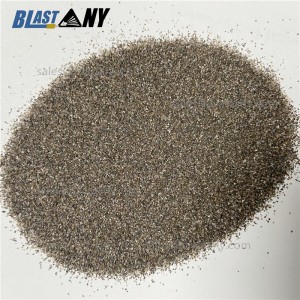
High hardness refractory Brown Fused Alumina
Brown fused alumina bauxite as raw material, coal, iron, high temperature above 2000 degrees hitches in arc smelting, the mill grinding plastic, magnetic separation to iron, screen is divided into a variety of particle size, dense texture, high hardness, particle formed globular, high consolidation is suitable for making ceramic, resin abrasive and grinding, polishing, sandblasting, casting, etc., can also be used for manufacturing advanced refractories.
-
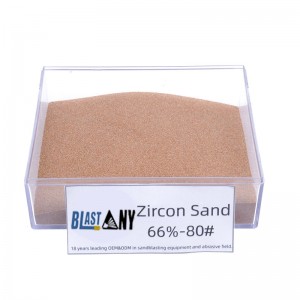
Zircon Sand for Casting Ceramics Refractory Material Factory
Zircon sand (zircon) is extremely resistant to high temperatures, and its melting point reaches 2750 degrees Celsius. And resistant to acid corrosion. 80% of the world’s production is directly used in the foundry industry, ceramics, glass industry and the manufacture of refractory materials. A small amount used in ferroalloy, medicine, paint, leather, abrasives, chemical and nuclear industries. Very small amounts are used for smelting zirconium metal.
Zircon sand containing ZrO265 ~ 66% is directly used as the casting material of iron metal in the foundry because of its melting resistance (melting point above 2500℃). Zircon sand has lower thermal expansion, higher thermal conductivity, and has stronger chemical stability than other common refractory materials, so high-quality zircon and other adhesives together have good adhesion and are used in the casting industry. Zircon sand is also used as bricks for glass kilns. Zircon sand and zircon powder have other uses when mixed with other refractory materials.
-
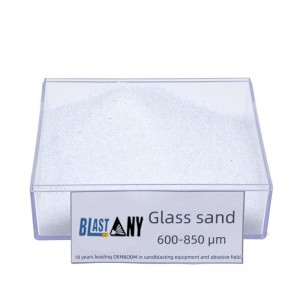
Long Life 30-90 Mesh Glass Grit Cheap Abrasives for Blasting and Rust Removal
Glass sand medium is an economical, silicon-free, consumable abrasive that provides aggressive surface contouring and coating removal. Made from 100% post-consumer recycled glass bottle glass, Junda Glass sand has a whiter and cleaner surface than mineral/slag abrasives.
-
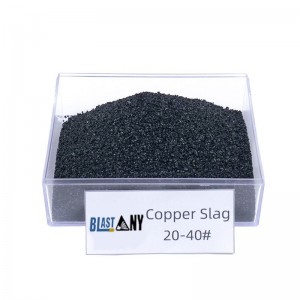
Copper Slag Grit Sand Blasting Abrasive for Surface Cleaning
Copper ore, also known as copper slag sand or copper furnace sand, is the slag produced after copper ore is smelted and extracted, also known as molten slag. The slag is processed by crushing and screening according to different uses and needs, and the specifications are expressed by the mesh number or the size of the particles. Copper ore has high hardness, shape with diamond, low content of chloride ions, little dust during sandblasting, no environmental pollution, improve the working conditions of sandblasting workers, rust removal effect is better than other rust removal sand, because it can be reused, economic benefits are also very considerable, 10 years, the repair plant, shipyard and large steel structure projects are using copper ore as rust removal.
When quick and effective spray painting is needed, copper slag is the ideal choice. Depending on the grade, it produces heavy to moderate etching and leaves the surface coated with primer and paint. Copper slag is a consumable silica free substitute for quartz sand.
-
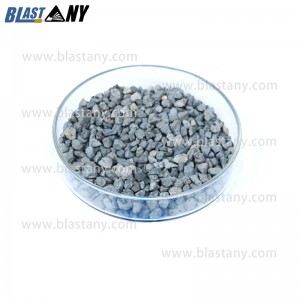
High quality steel slag 60-80Mesh for good rust removal effect
Iron and steel slag can be divided into blast furnace slag and steelmaking slag. On the first hand, the former one is produced by the melting and reduction of the iron ore in the blast furnace. On the other hand, the latter one is formed during the steelmaking process by changing the composition of iron.
-
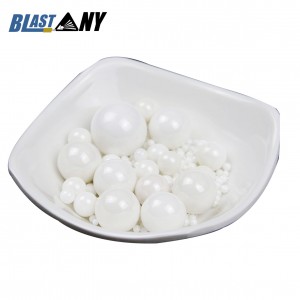
ceramic ball
Product Description Junda ceramic ball refers to alumina powder as raw material, after ingredients, grinding, powder (pulping, mud), forming, drying, firing and other processes produced, mainly as grinding medium and widely used ball stone. Because the content of alumina is more than 92%, it is also called high aluminum ball. Appearance is white ball, diameter of 0.5-120mm. Company Profile Located in Jinan City, Shandong Province, Jinan Junda Industrial Technology Co., Ltd. provides excellent... -
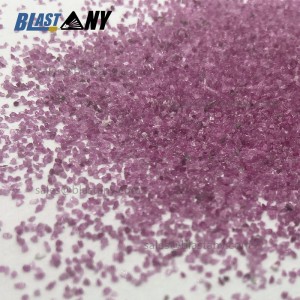
Pink Funsed Alumina PA
Production process: The smelting process of chrome corundum is the same as that of white corundum, except that a certain amount of chrome oxide is added in the smelting process, which is light purple or rose color. Chromium corundum due to the introduction of Cr3, + improved the toughness of abrasive, its toughness is high white corundum, and close to white corundum hardness, used for processing large ductile material, its processing efficiency is higher than white corundum, and workpiece sur... -
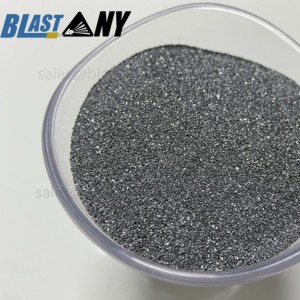
Stainless Steel Grit
Product Description Stainless steel grit is stainless steel angular particle. It can be used to replace a variety of mineral and non-metallic abrasives, such as alumina, silicon carbide, quartz sand, glass bead, etc. Stainless steel grit is mainly used for surface cleaning, paint removing and descaling of non-ferrous metals and stainless steel products, forming uniform surface roughness, thus especially suitable for surface pretreatment before coating. Compared with non-metallic abrasives, st... -
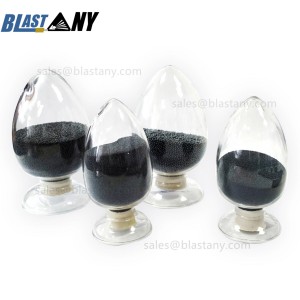
Low Carbon Steel Shot
Product introduction: The production process is the same as the national standard steel shot, using centrifugal granulation technology, because the raw material is low carbon steel, so omit high temperature tempering process, using isothermal tempering process production. Feature LOW CARBON STEEL GRANAL ADVANTAGE COST • Performance over 20% against high carbon shots • Less wear of machinery and equipment due to the greater absorption of energy in the impacts in the pieces • Particles free of... -
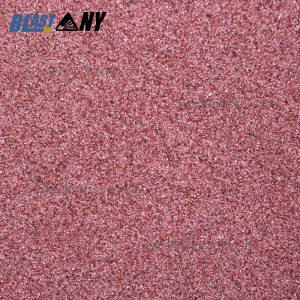
Koc approvl Garnet sand for Perfect Surface Treatment
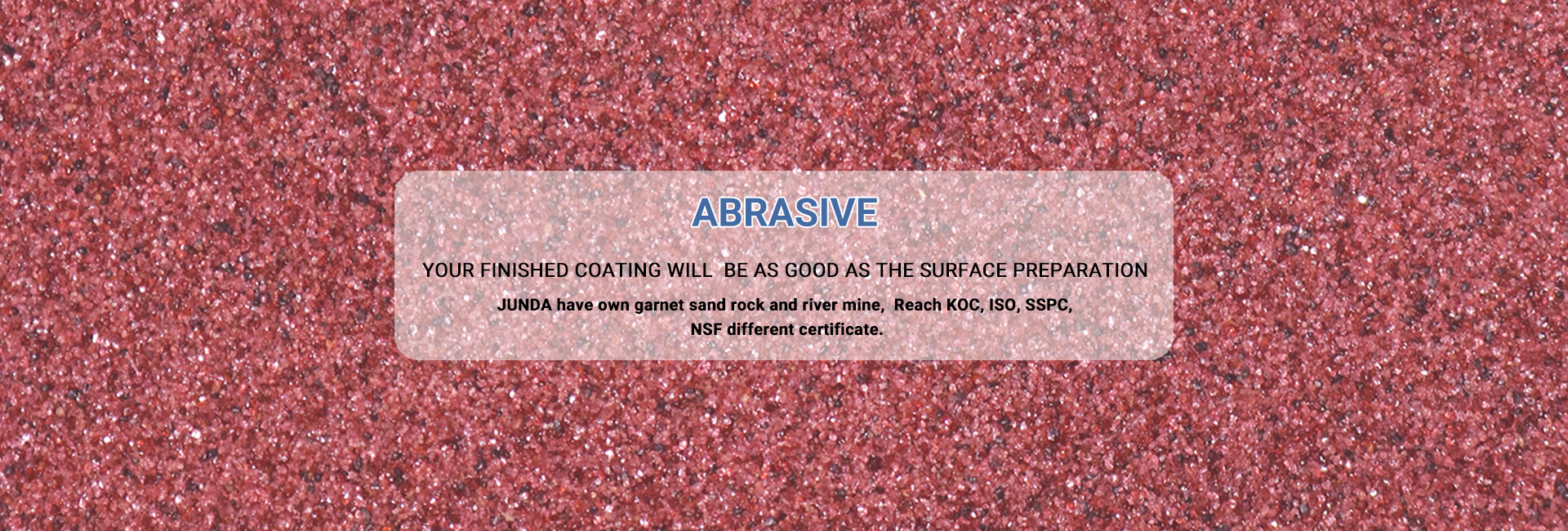
Junda garnet sand, one of the hardest minerals. We closely cooperate with the leading waterjet equipment manufacturers to develop the higher performance and more cost-effective products for the customers. We remain the garnet leading supplier in China who keep product research, development, performance and cost-effectiveness.
Junda garnet sand is divided into three kinds, respectively, rock sand, river sand, sea sand, river sand and sea sand have excellent cutting speed, there is no dust products, clean effect, environmental protection.
-
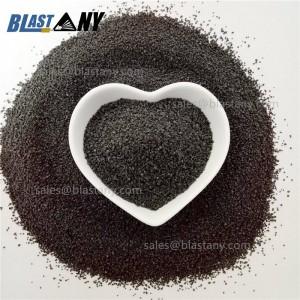
The hardest blasting medium Silicon Carbide Grit
Silicon Carbide Grit
Due to its stable chemical properties, high thermal conductivity, low thermal expansion coefficient, and good wear resistance, silicon carbide has many other uses besides being used as abrasives. For example, silicon carbide powder is applied to the impeller or cylinder of a water turbine by a special process. The inner wall can improve its wear resistance and prolong its service life by 1 to 2 times; the high-grade refractory material made of it has heat shock resistance, small size, light weight, high strength and good energy-saving effect. Low-grade silicon carbide (containing about 85% of SiC) is an excellent deoxidizer.
-
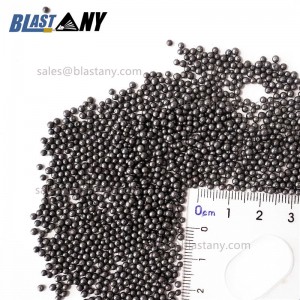
High quality cast steel shot with high wear resistance
Junda Steel Shot is manufactured by melting selected scrap in electric induction furnace. The chemical composition of molten metal is analyzed and strictly controlled by spectrometer to obtain SAE Standard specification. The molten metal is atomized and transformed into round particle and subsequently quenched and tempered in a heat treating process to obtain a product of uniform hardness and microstructure, screened by size according to SAE Standard specification.

-

Phone
-

E-mail

