

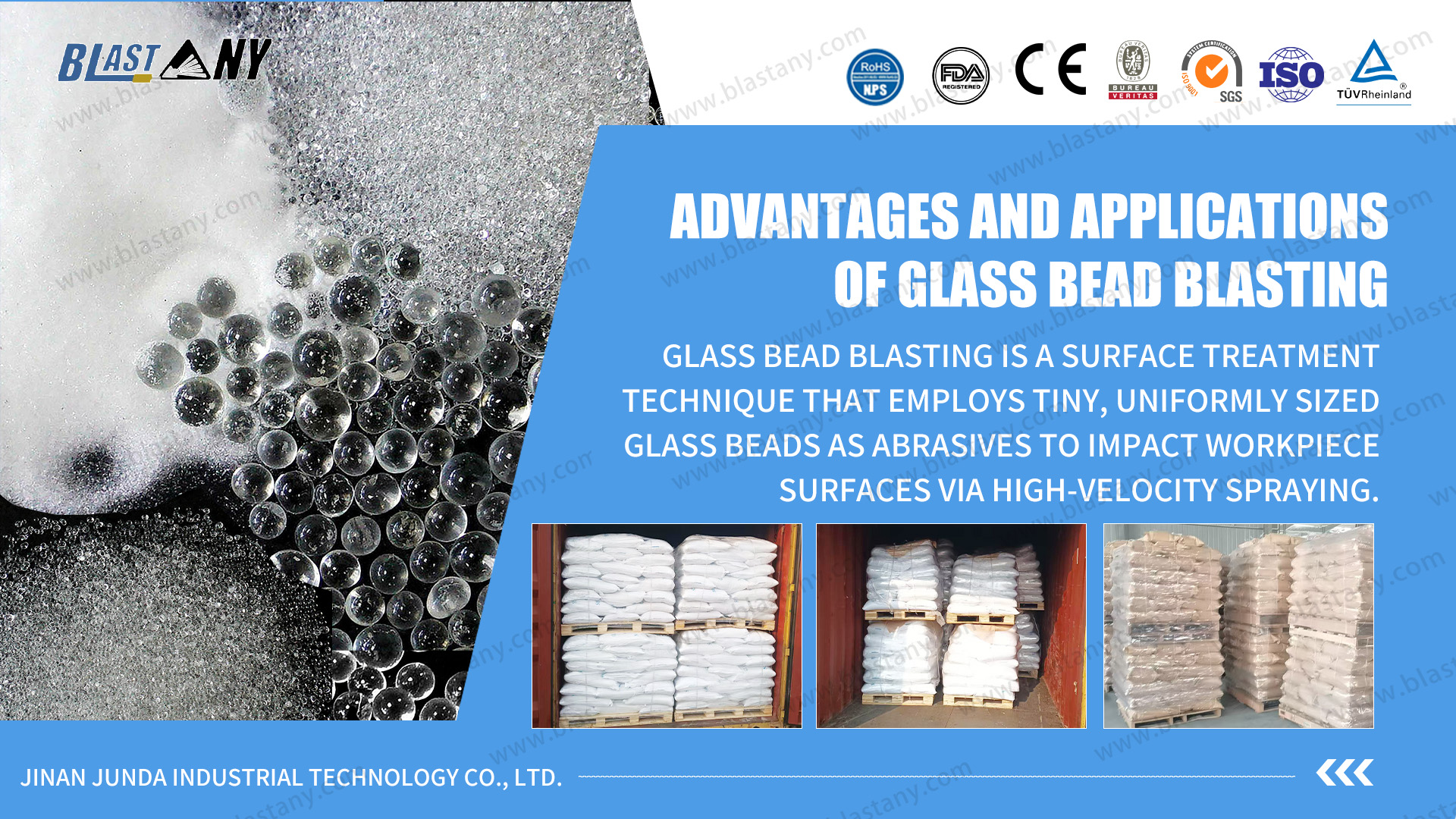
Glass bead blasting is a surface treatment technique that employs tiny, uniformly sized glass beads as abrasives to impact workpiece surfaces via high-velocity spraying. This paper presents a detailed analysis of its core advantages and application domains.
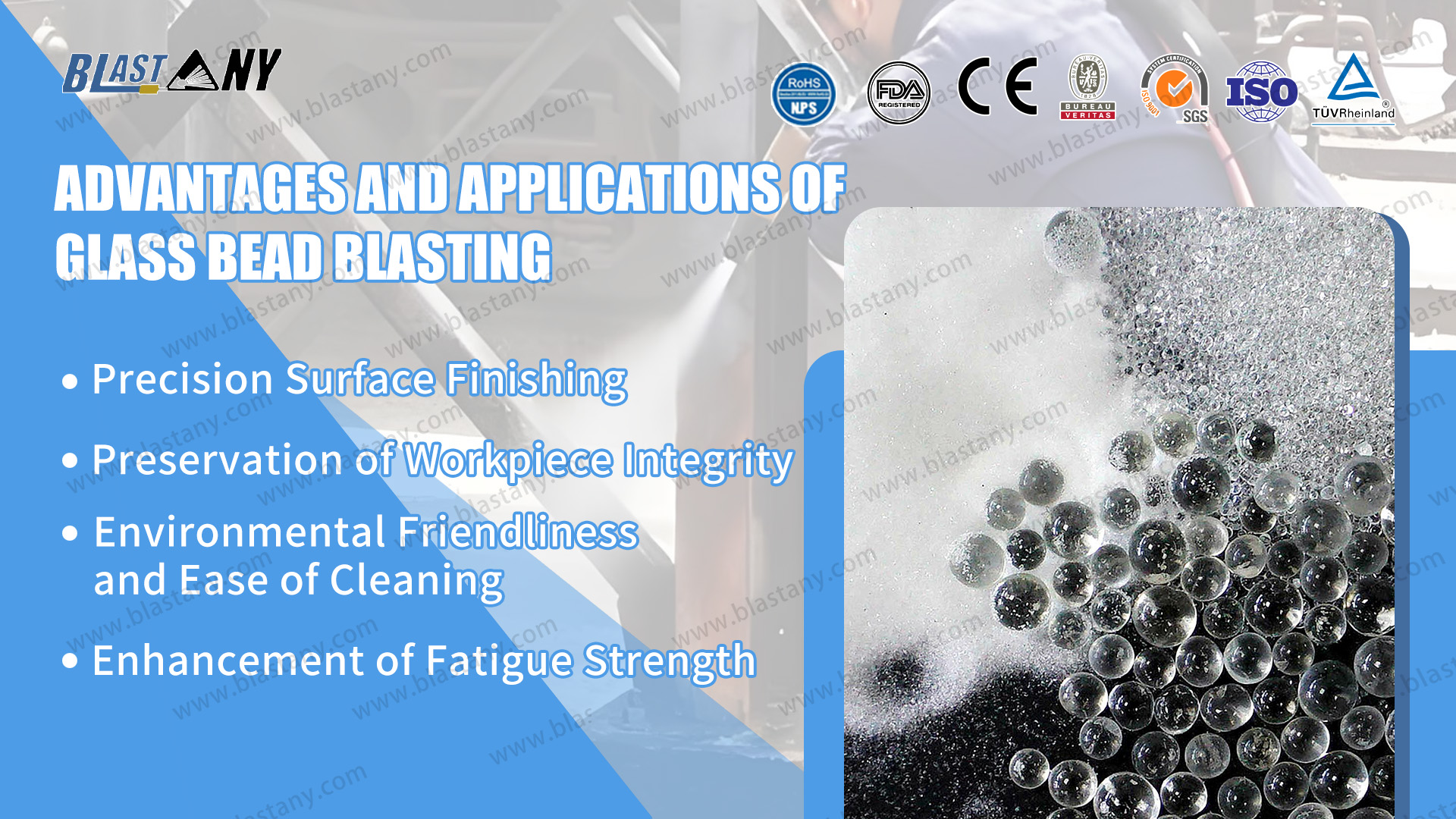
I. Core Advantages of Glass Bead Blasting
1. Precision Surface Finishing
Glass beads exhibit moderate hardness (Mohs hardness: 6-7), enabling them to produce uniformly refined surface textures while avoiding excessive material removal or visible scratch damage. This makes them ideal for workpieces requiring high surface , such as metal polishing and the removal of thin oxide layers.
2. Preservation of Workpiece Integrity
Compared to hard abrasives (e.g., steel grit, brown fused alumina), glass beads deliver a gentler impact force, minimizing the risk of workpiece damage. They effectively maintain the original dimensional accuracy and mechanical properties of components, making them particularly suitable for processing thin-walled parts, precision components, and soft materials (e.g., aluminum, copper, and titanium alloys).
3. Environmental Friendliness and Ease of Cleaning
Glass beads possess stable chemical properties and are free of hazardous substances like free silica. Post-blasting residue is minimal and it rarely embeds into workpiece surfaces, simplifying cleaning procedures. Additionally, its reusability reduces consumable costs, while their recyclability and low, non-toxic dust emissions mitigate environmental and occupational health risks, aligning with modern industrial environmental standards.
4. Enhancement of Fatigue Strength
Through the shot peening effect, glass bead impacts induce a compressive stress layer on metal surfaces, improving the fatigue resistance and corrosion resistance of workpieces. This advantage is widely utilized in high-stress industries such as aerospace and automotive manufacturing.
II. Key Application Domains
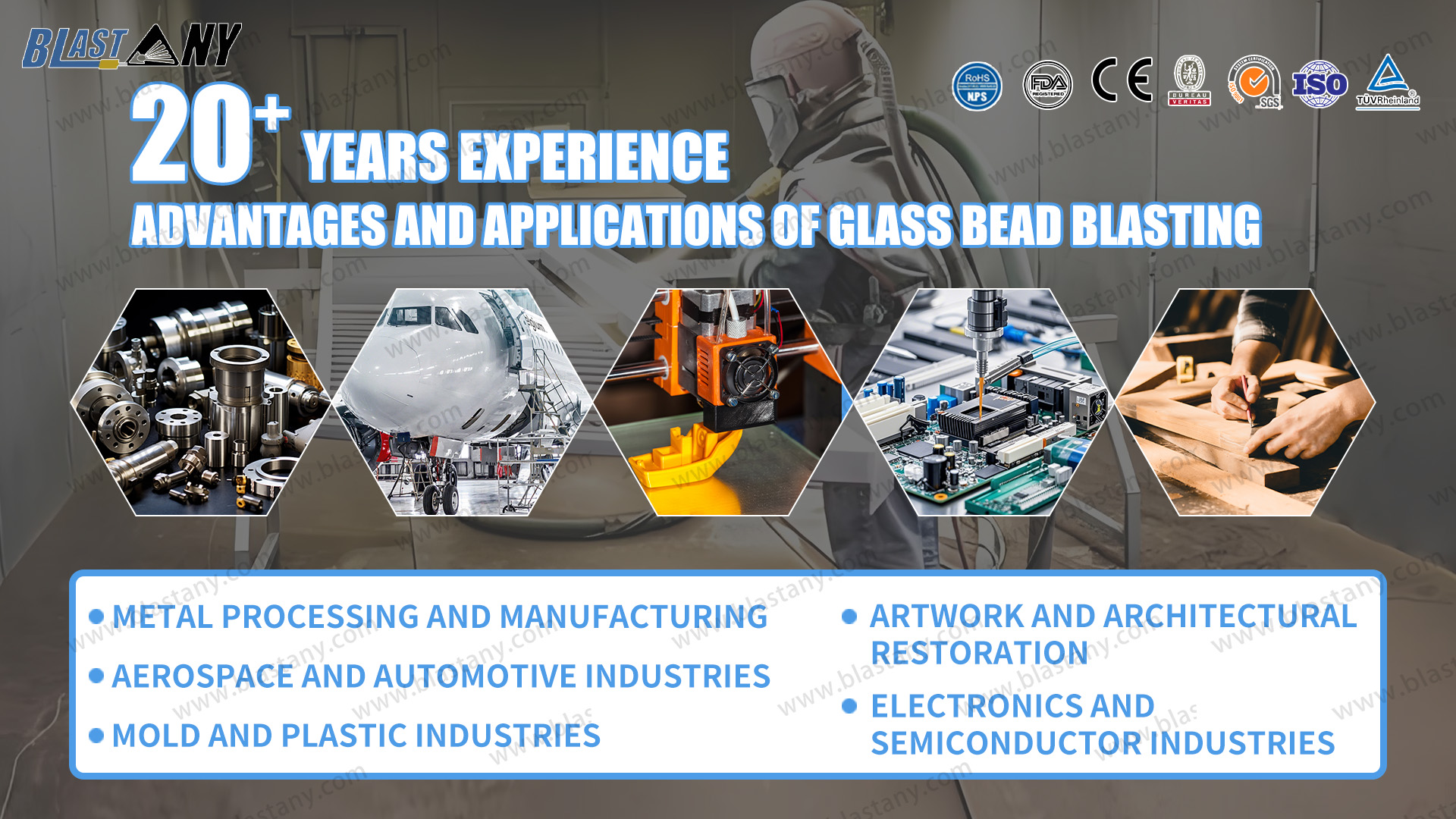
1. Metal Processing and Manufacturing
Surface Cleaning and Rust Removal: Effective for eliminating light rust, coatings, and oil contaminants, though it is primarily suited for mild corrosion (severe rust requires combination with other abrasives).
Deburring and Chamfering: Used to remove burrs from precision components (e.g., gears, bearings, medical devices) and form smooth edges.
Shot Peening: Enhances the fatigue life of critical components such as springs, crankshafts, and turbine blades.
2. Aerospace and Automotive Industries
Applied in the surface treatment of engine parts, aluminum alloy frames, and landing gear components, where it balances cleaning efficacy with mechanical strengthening requirements. It is also used to repair lightly worn parts and restore surface flatness.
3. Mold and Plastic Industries
Cleans injection molds and die-casting molds by removing residual plastic or release agents without compromising mold precision.
Imparts a matte finish to molds to improve demolding performance.
4. Electronics and Semiconductor Industries
Cleans circuit boards and electronic enclosures, removing oxide layers without impairing electrical conductivity.
Used for precision cleaning of semiconductor equipment components (with strict dust level control).
5. Artwork and Architectural Restoration
Employed in the cleaning and restoration of bronze sculptures and antique metal artifacts to avoid damage to historical relics. It is also used to create matte finishes on architectural decorative materials (e.g., stainless steel, brass surfaces).
For more information, please feel free to discuss with our company!
Post time: Dec-04-2025


