






Glass beads with different refractive indices are used in road markings to achieve nighttime reflectivity through the principle of light refraction, directly improving nighttime visibility and driving safety.
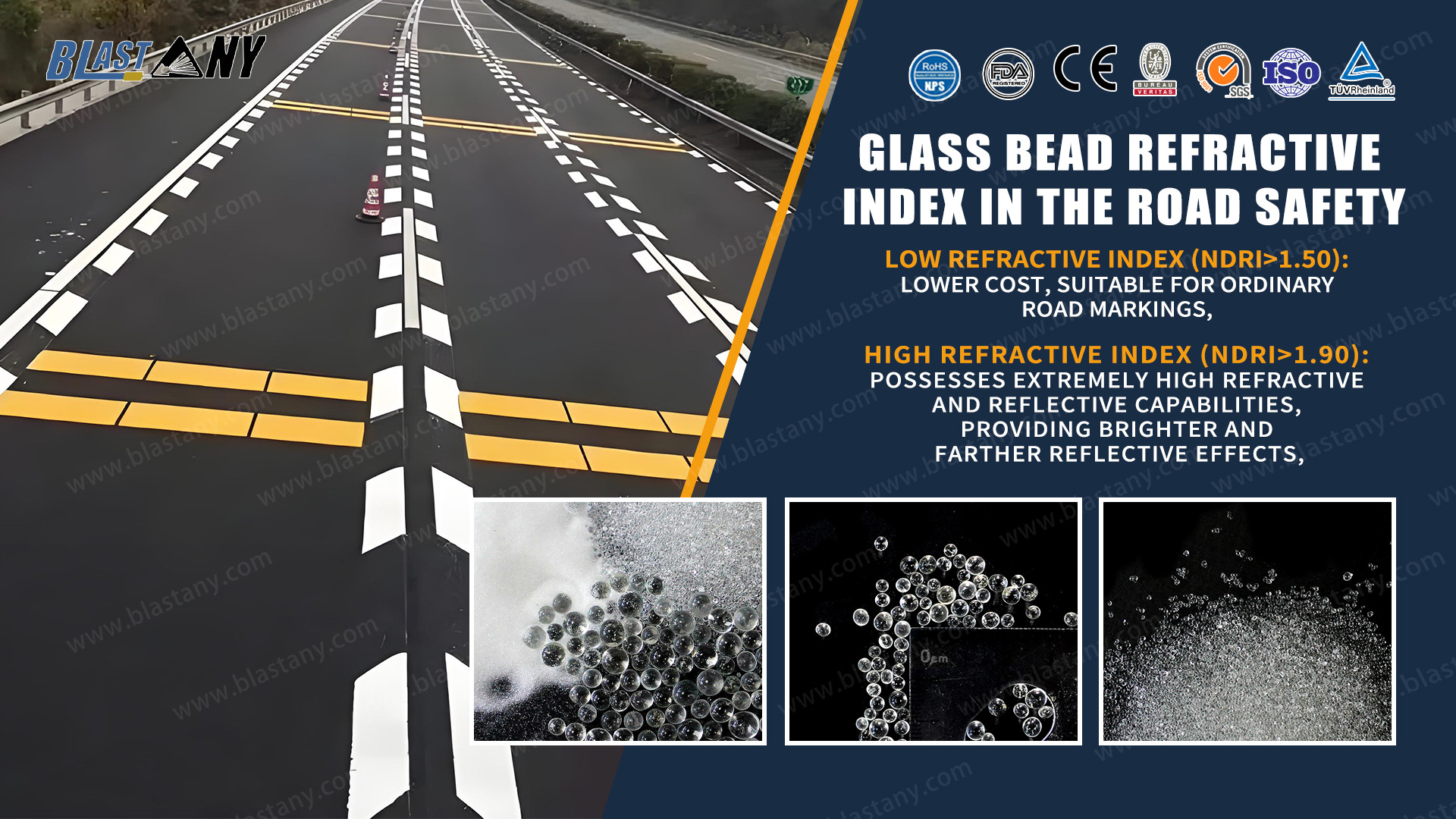
High refractive index (Nd RI > 1.90) glass beads are typically used on high-grade roads to provide stronger reflectivity, while low refractive index (Nd RI > 1.50) beads are suitable for ordinary roads or used in combination to balance cost and performance. Common mixed configurations meet the needs of different nighttime environments.
Mechanism of action of glass beads with different refractive indices: Low refractive index (NdRI>1.50): Lower cost, suitable for ordinary road markings, providing basic reflectivity under normal lighting conditions. High refractive index (NdRI>1.90): Possesses extremely high refractive and reflective capabilities, providing brighter and farther reflective effects, especially noticeable in wet or inclement weather.
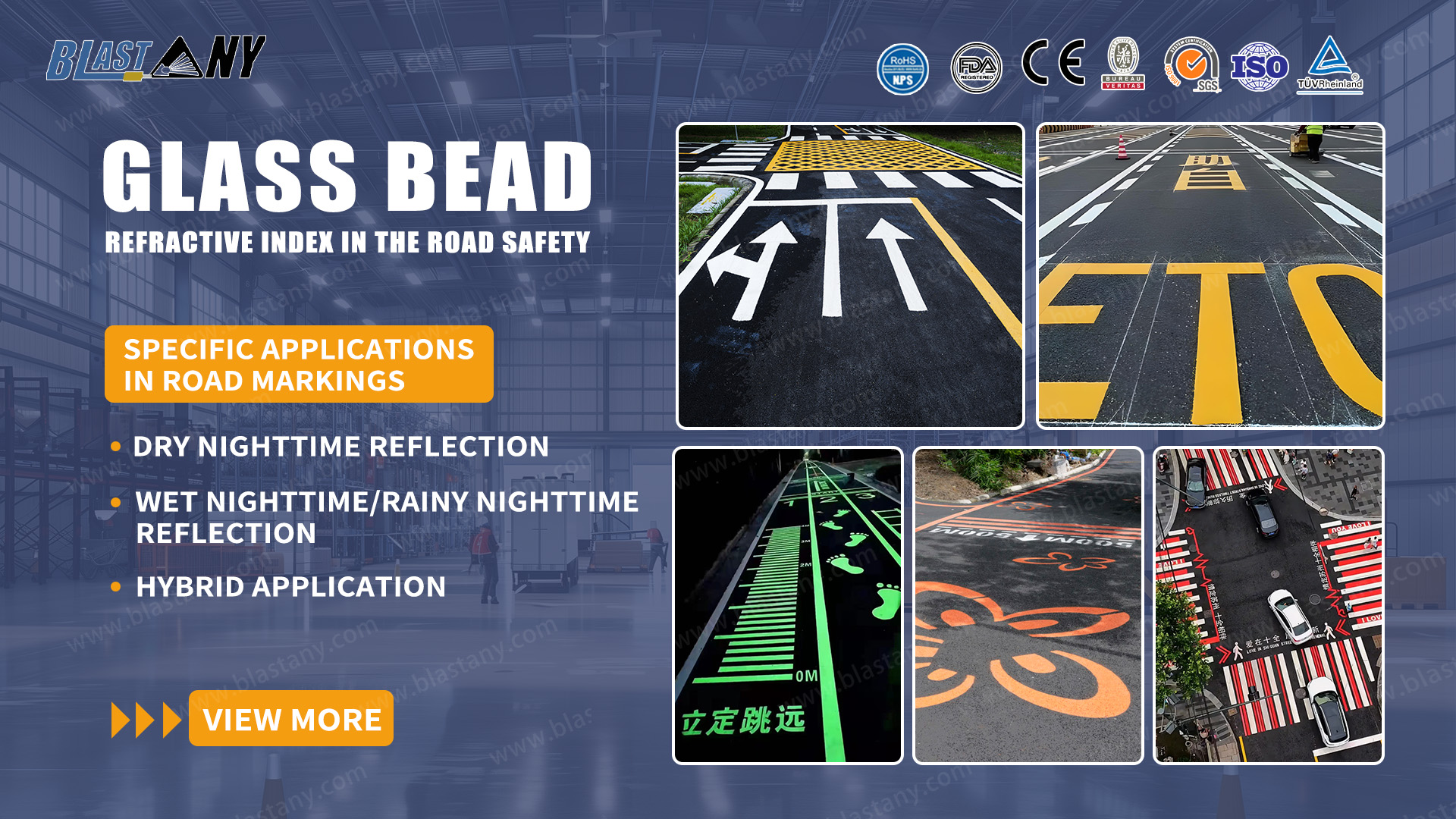
Specific applications in road markings:
Dry nighttime reflection: Glass beads with a refractive index (Nd RI > 1.50) or slightly higher are generally used to provide reflection on dry surfaces.
Wet nighttime/rainy nighttime reflection: Larger glass beads with a high refractive index (Nd RI > 1.90) are required. These beads can maintain efficient prism reflection performance under wet conditions and prevent loss of reflection due to water film.
Hybrid Application: In actual construction, glass beads with different refractive indices and particle sizes are often mixed to achieve all-weather reflective performance in both dry and humid environments. Performance Enhancement: According to road marking performance standards, using high-refractive-index glass beads can significantly improve the brightness coefficient and reflectivity of road markings under diffused lighting, enhancing traffic safety.

Any further questions, please feel free to contact us. Our professional technical engineers will recommend suitable products for you.
Post time: Jan-29-2026


