


Sandblasting is a commonly used surface treatment technique that uses a high-speed jet of abrasive particles to abrade the surface of a workpiece, achieving cleaning, polishing, or decorative effects. The choice of abrasive directly affects the efficiency and effectiveness of sandblasting. Among many abrasives, brown and white fused alumina are widely used due to their high hardness and good wear resistance. Understanding the performance differences between the two is crucial for optimizing sandblasting processes.
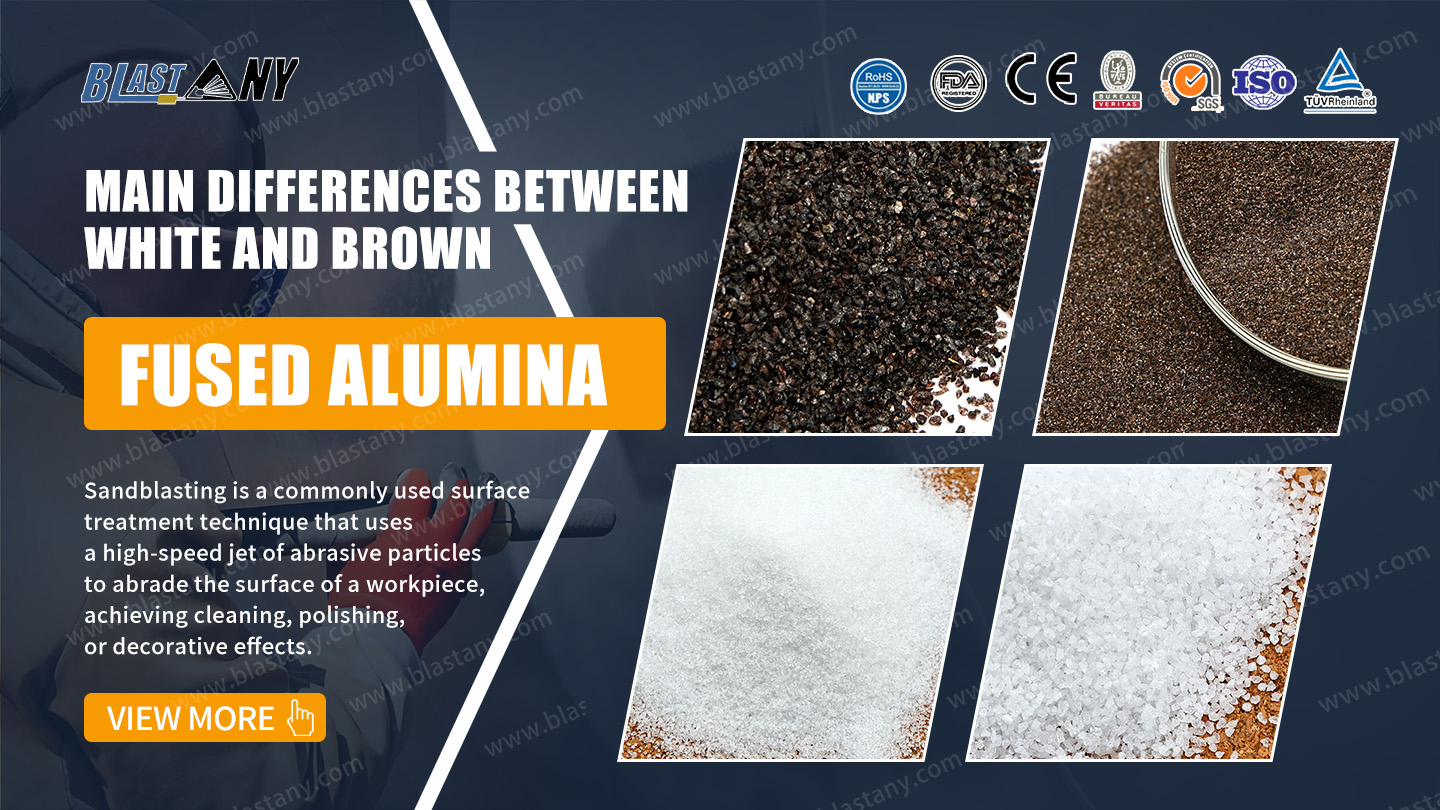
I. Brown and White Fused Alumina
Both brown and white fused alumina are forms of corundum, primarily composed of aluminum oxide. The difference lies in their composition: brown fused alumina contains iron, giving it a brown color, while white fused alumina is pure white and free of impurities. Due to the impurities in brown fused alumina, its hardness and density are slightly lower than white fused alumina.
II. Main Differences Between Brown and White Fused Alumina
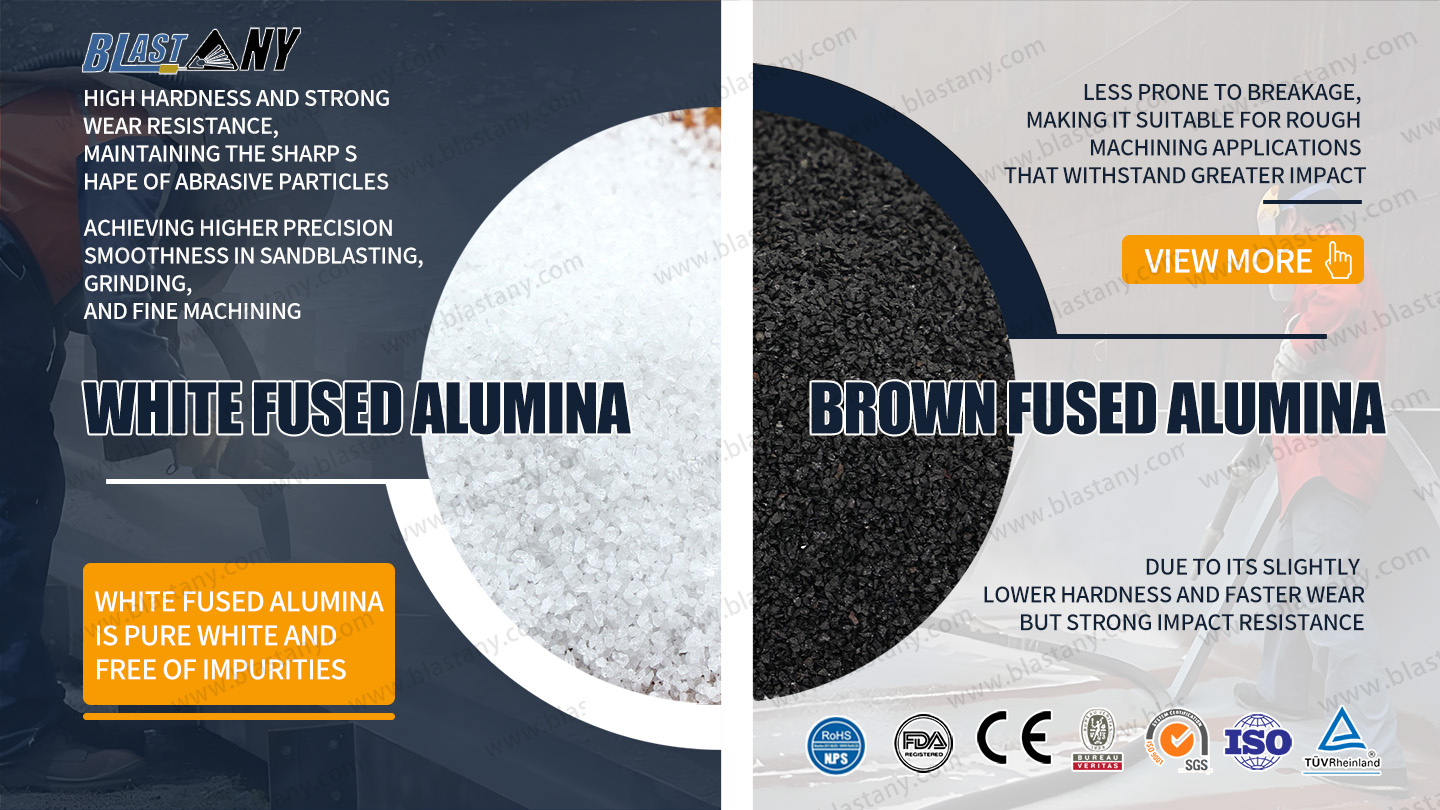
1. In terms of hardness and density, white fused alumina is significantly superior to brown fused alumina. Due to impurities, brown fused alumina has slightly lower hardness and density than white fused alumina. This difference directly affects their wear resistance and processing performance in abrasive applications. White fused alumina has high hardness and strong wear resistance, maintaining the sharp shape of abrasive particles, thus achieving higher precision and smoothness in sandblasting, grinding, and fine machining. In contrast, although brown fused alumina has slightly lower hardness, its stable crystal structure makes it less prone to breakage, making it suitable for rough machining applications that withstand greater impact.
2. Differences in Industrial Applications. White fused alumina, due to its high hardness and wear resistance, is often used in fine surface processing, metal polishing, and high-precision engraving, producing fine, smooth textures. Brown fused alumina, due to its slightly lower hardness and faster wear, but strong impact resistance, is often used in architectural decoration, sculpture, and rough sandblasting of larger workpieces. Furthermore, the processing characteristics of brown fused alumina easily form capillary textures, suitable for achieving specific decorative effects.
III. Summary
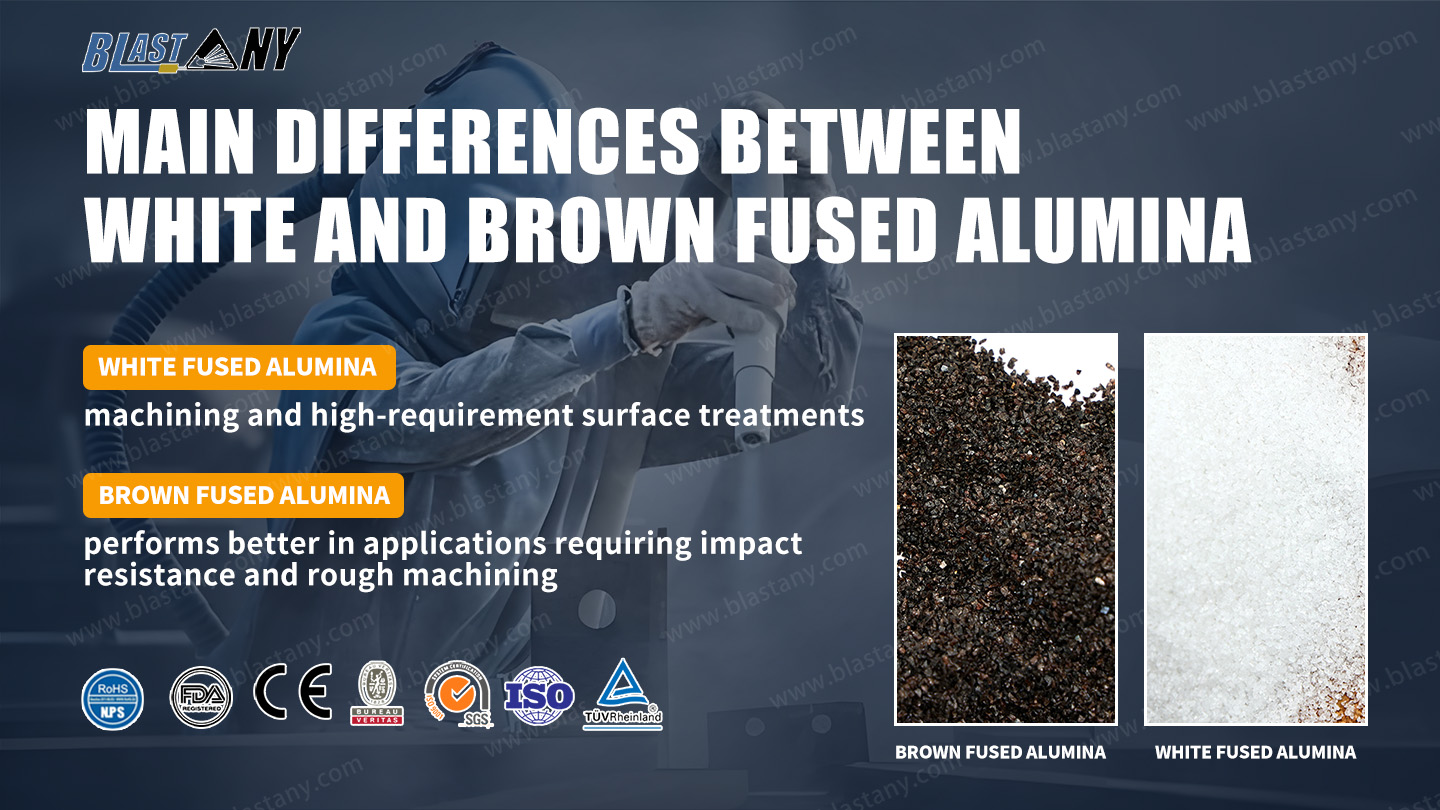
In conclusion, white fused alumina and brown fused alumina differ significantly in chemical composition, color, hardness, density, and processing performance. White fused alumina is suitable for fine machining and high-requirement surface treatments, while brown fused alumina performs better in applications requiring impact resistance and rough machining. Choosing the right one based on different processing needs can effectively improve processing efficiency and surface quality, achieving a balance between economy and performance.
For more details, please feel free to contact us.
Post time: Apr-02-2026


