



I. Mesh & Particle Size The rule is simple: the higher the mesh number, the finer the grit.
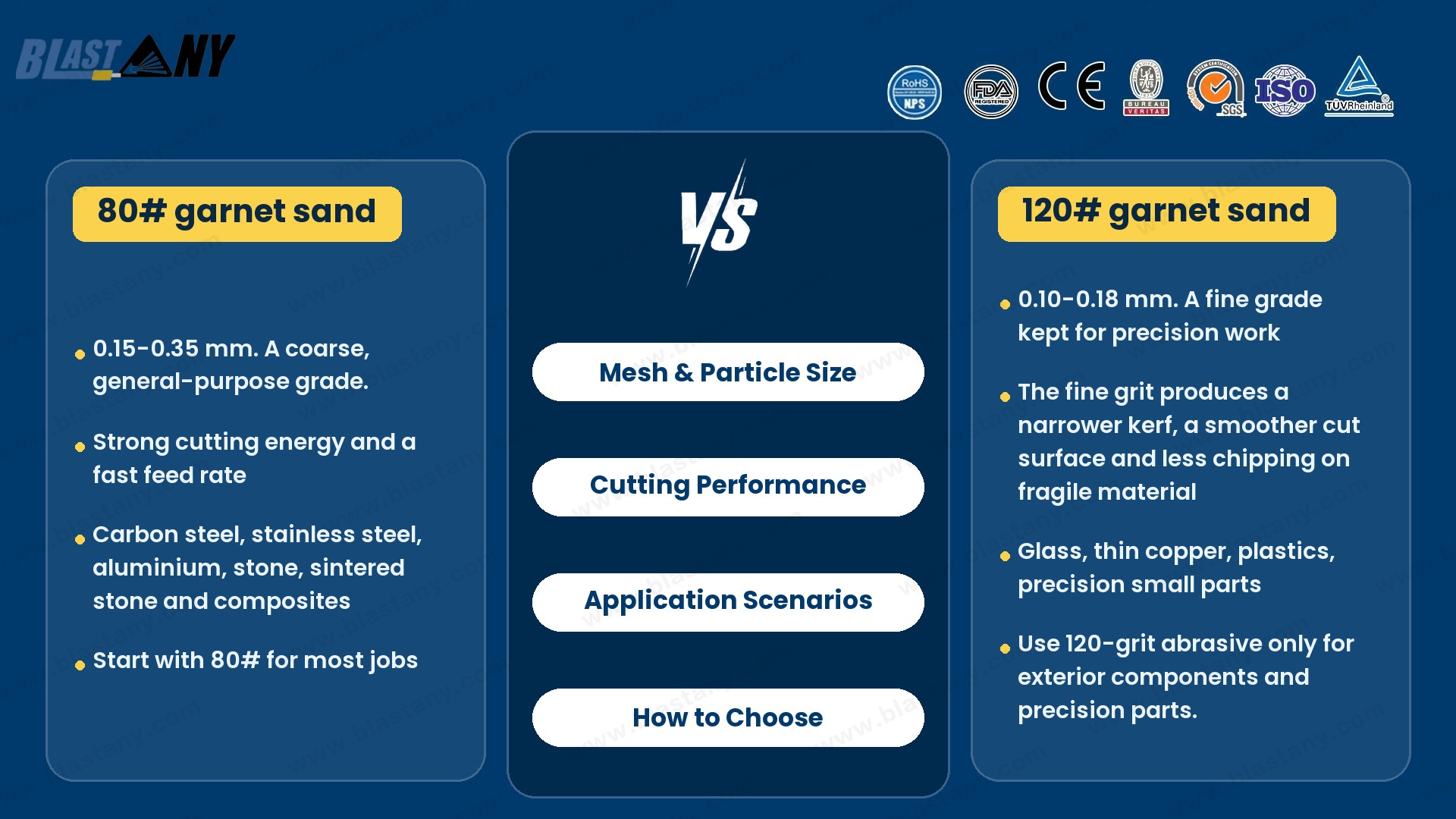
80#: 0.15-0.35 mm. A coarse, general-purpose grade.
120#: 0.10-0.18 mm. A fine grade kept for precision work.

II. Cutting Performance
80#: Strong cutting energy and a fast feed rate. It balances cutting speed with kerf quality and gives the best cost-performance of the common grades. It runs standard 0.76/1.02 mm focusing tubes without clogging, and handles both thin and thick plate. The cut surface is medium roughness, which meets most normal tolerance requirements.
120#: The fine grit produces a narrower kerf, a smoother cut surface and less chipping on fragile material. The trade-off is speed: it cuts about 30% slower than 80#. It also needs smaller 0.51/0.76 mm focusing tubes, consumes more abrasive for the same workload, and costs more per part. Thick, hard plate cuts poorly.
III. Application Scenarios
80#: Carbon steel, stainless steel, aluminium, stone, sintered stone and composites. Routine batch production and heavy stock cutting from 3 to 50 mm. This is the grade factories keep in stock and the most common choice in export orders.
120#: Glass, thin copper, plastics, precision small parts, cosmetic and exposed parts, and intricate fine patterns that demand a high surface finish.

IV. How to Choose
Start with 80# for most jobs: faster cutting, lower cost per part, fewer nozzle issues.
Move to 120# only when edge quality or fine detail matters more than speed, and the budget allows the extra abrasive consumption.
Post time: Nov-05-2026


