
In ship rust removal and coating pretreatment, copper slag and garnet are two common blasting abrasives. Each has its own characteristics, with the main differences as follows:
1. Source and Composition
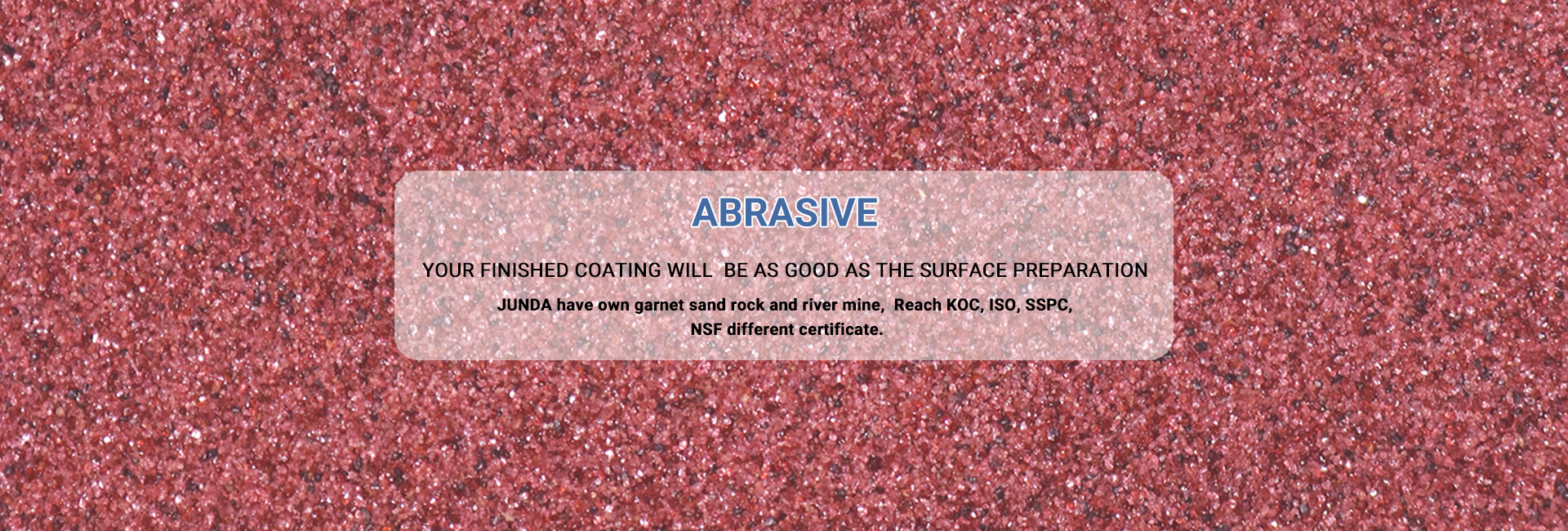
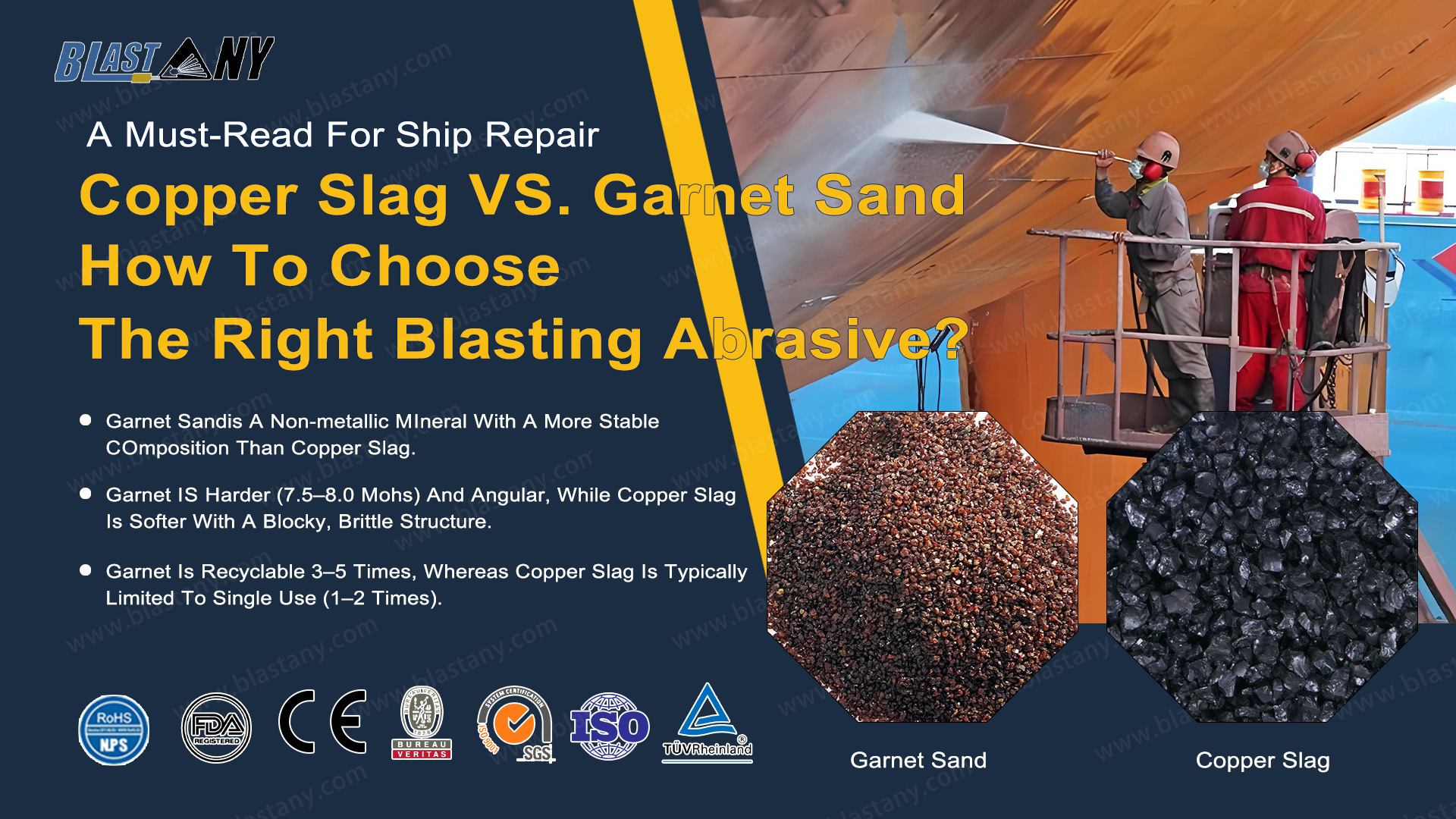
Copper slag is a by-product in the copper smelting process and belongs to artificial abrasives. Garnet is a naturally mined non-metallic mineral with a stable composition.
2. Hardness and Shape
Garnet has a Mohs hardness of approximately 7.5–8.0, with sharp, angular particles. Copper slag has a slightly lower hardness, and its particles are mostly blocky or brittle in structure.
3. Usage Pattern
Garnet can be recycled 3-5 times, making it suitable for multiple reuses. Copper slag is typically used 1-2 times or as a single-use abrasive without recovery.
4. Blasting Effect
The surface cleanliness of garnet after sandblasting can reach Sa3 level, with uniform roughness and less embedded sand. Copper slag sandblasting can also achieve a relatively good degree of cleanliness, but the characteristics of the surface residues are different.
5. Cost Structure
Copper slag has a lower unit price, but because it is often used only once and has high consumption volume, the total cost should be calculated based on actual working conditions. Garnet has a slightly higher unit price, but it can be recycled, resulting in lower consumption per unit area.
6. Working Environment
Both sandblasting processes will generate a certain amount of dust. The amount of garnet dust is relatively small, while the amount of copper slag dust is slightly higher. Both require corresponding dust prevention measures.
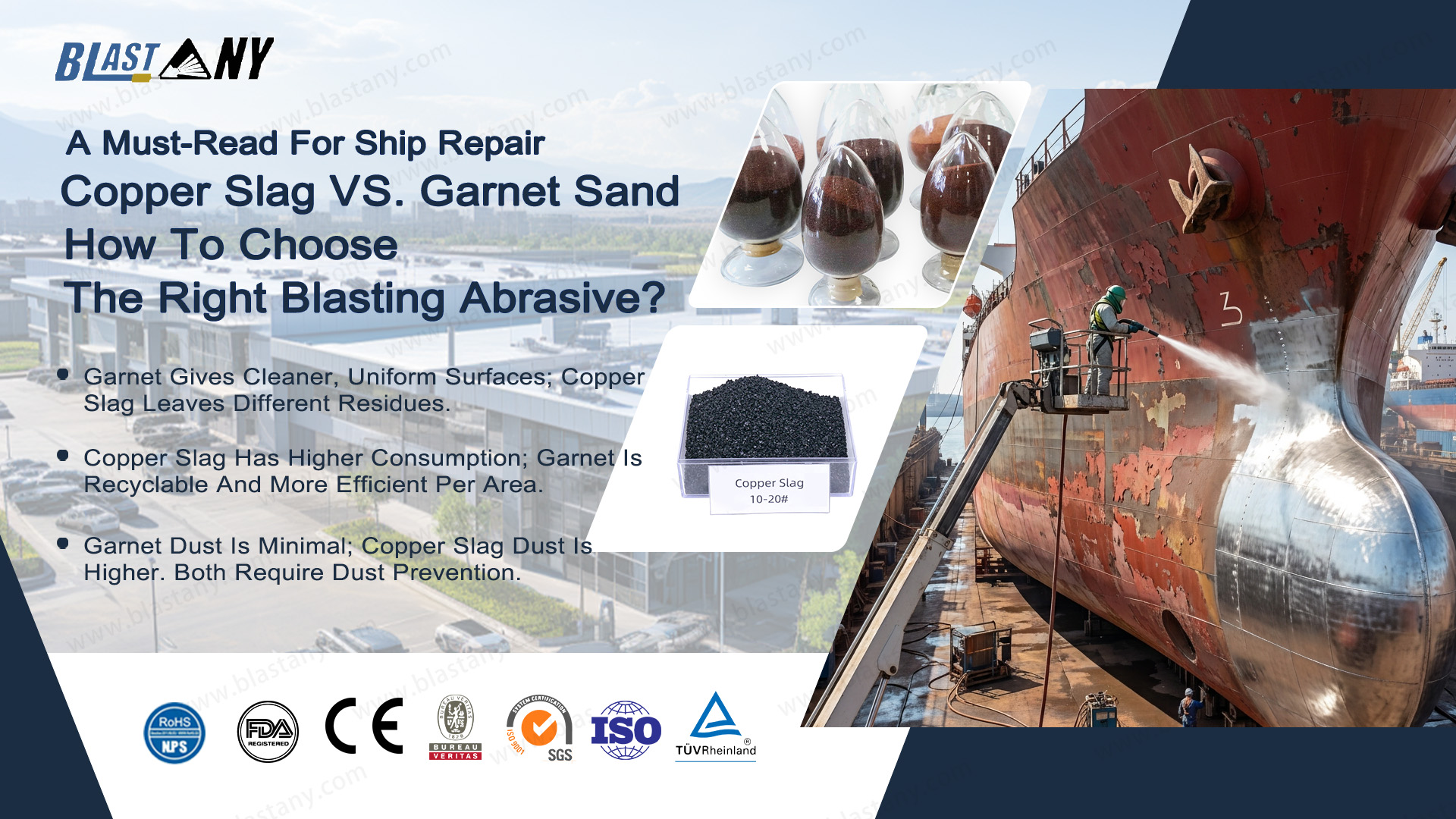
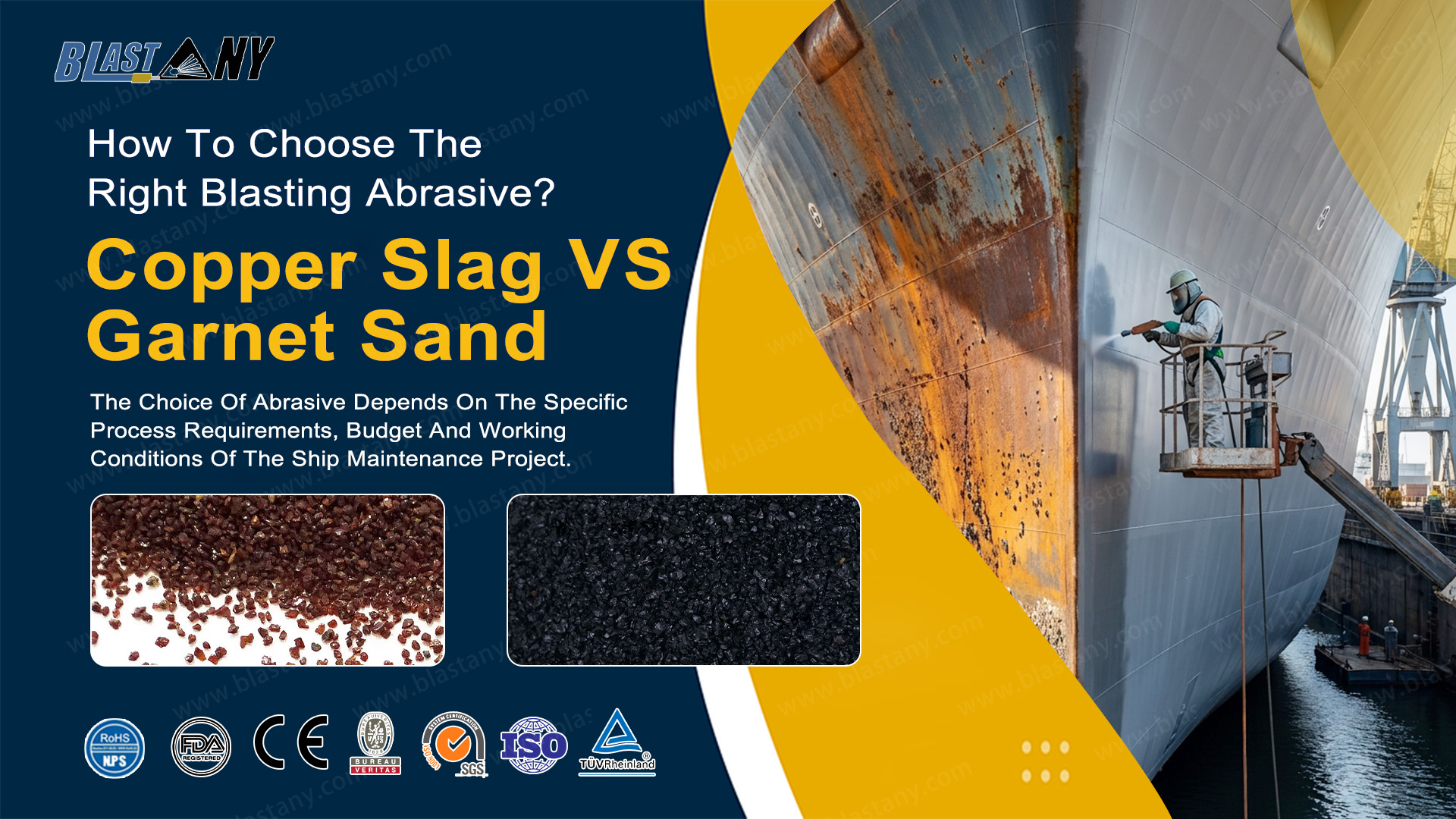
The choice of abrasive depends on the specific process requirements, budget and working conditions of the ship maintenance project. For ship maintenance, long-lasting anti-corrosion is the key. Choosing the right abrasive can make your efforts twice as effective with half the effort!
Post time: May-22-2026


