
The Root Cause
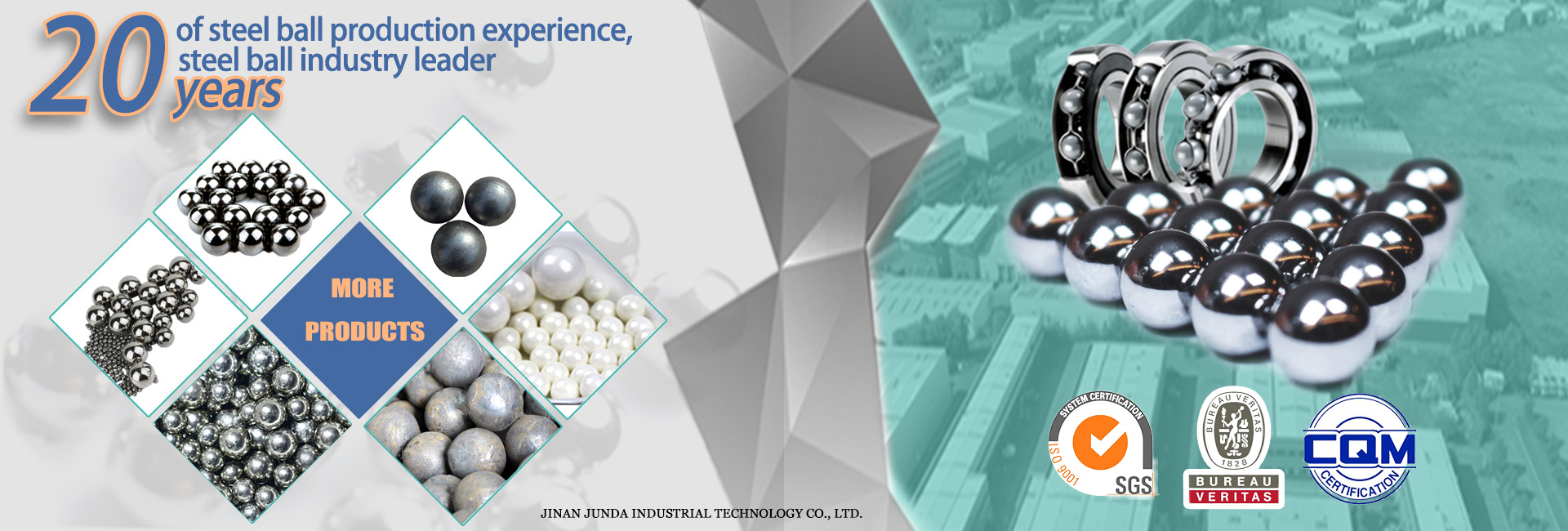
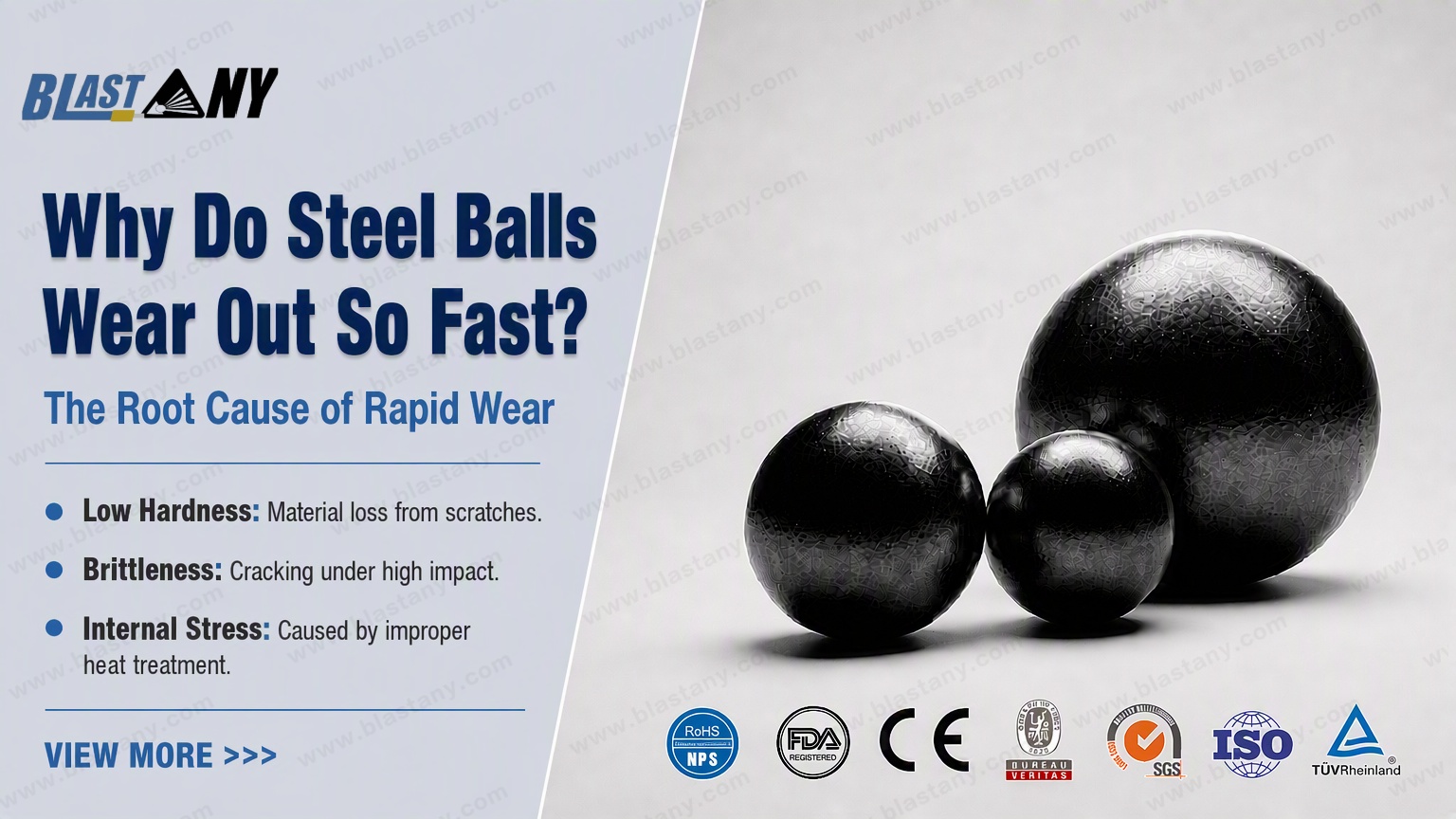
In ball mills and stirred mills, steel balls endure continuous impact and abrasion. Rapid wear typically stems from three imbalances:
1. Insufficient Hardness Low-hardness balls are easily scratched by ore or abrasives, leading to rapid material loss.
2. Insufficient Toughness Overly hard but brittle balls crack under high-impact conditions, generating fragments that contaminate the material.
3. Improper Heat Treatment Imprecise quenching and tempering leave residual internal stress, accelerating fatigue wear.
The Solution: Matching Hardness to Toughness
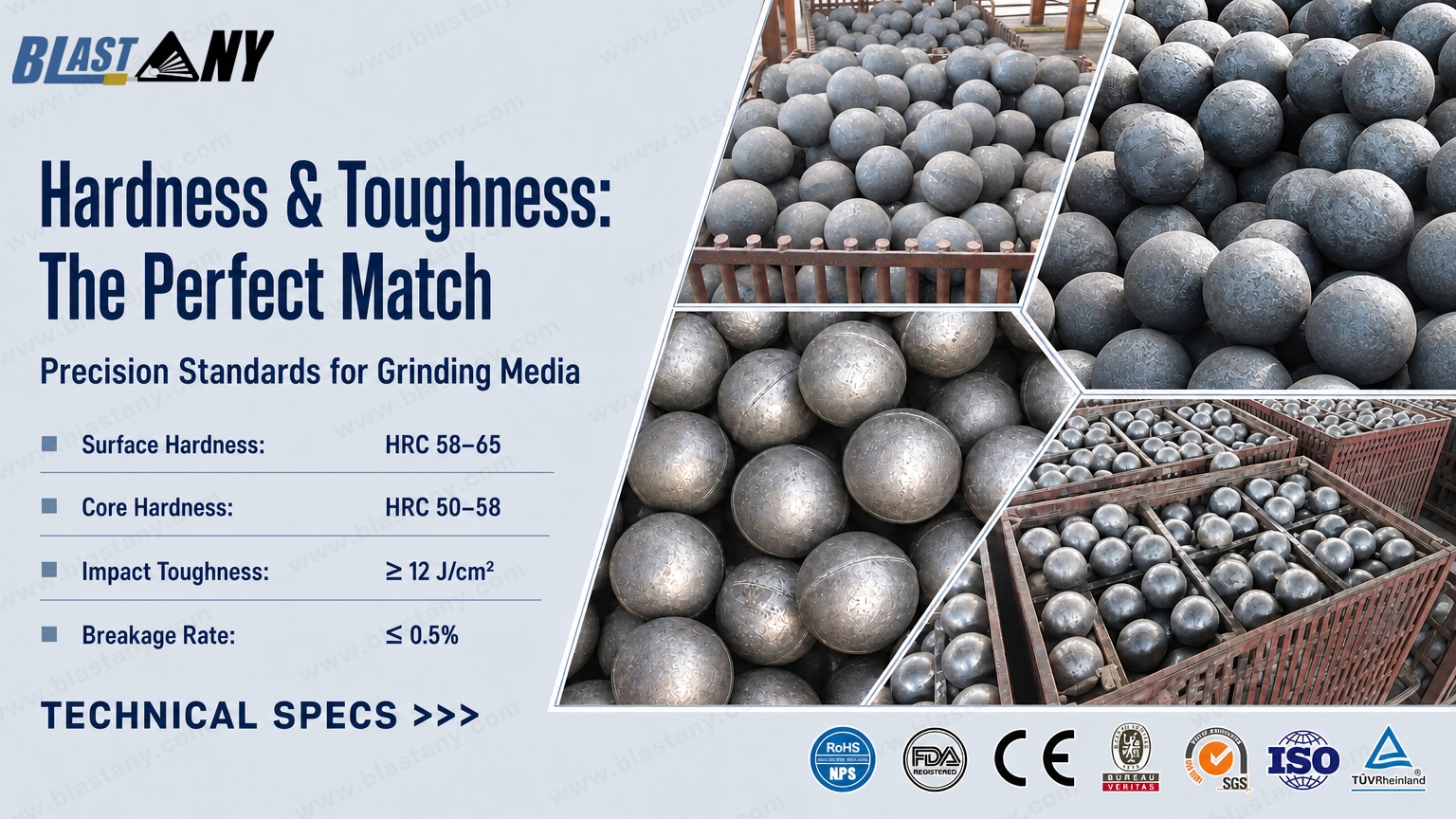
The core of high-quality grinding steel balls lies in precisely matching hardness with toughness. Recommended parameters:
Surface Hardness: HRC 58–65
Core Hardness: HRC 50–58
Impact Toughness: ≥ 12 J/cm²
Breakage Rate: ≤ 0.5%
Key Process Controls:
Alloy composition: Adding Cr, Mn, Mo improves matrix hardness and wear resistance.
Full-body quenching: Ensures uniform hardness from surface to core, preventing accelerated wear from a soft core.
Low-temperature tempering: Relieves quenching stress, restoring toughness while maintaining high hardness.
Real-World Value
Compared to standard steel balls, optimized grinding balls deliver:
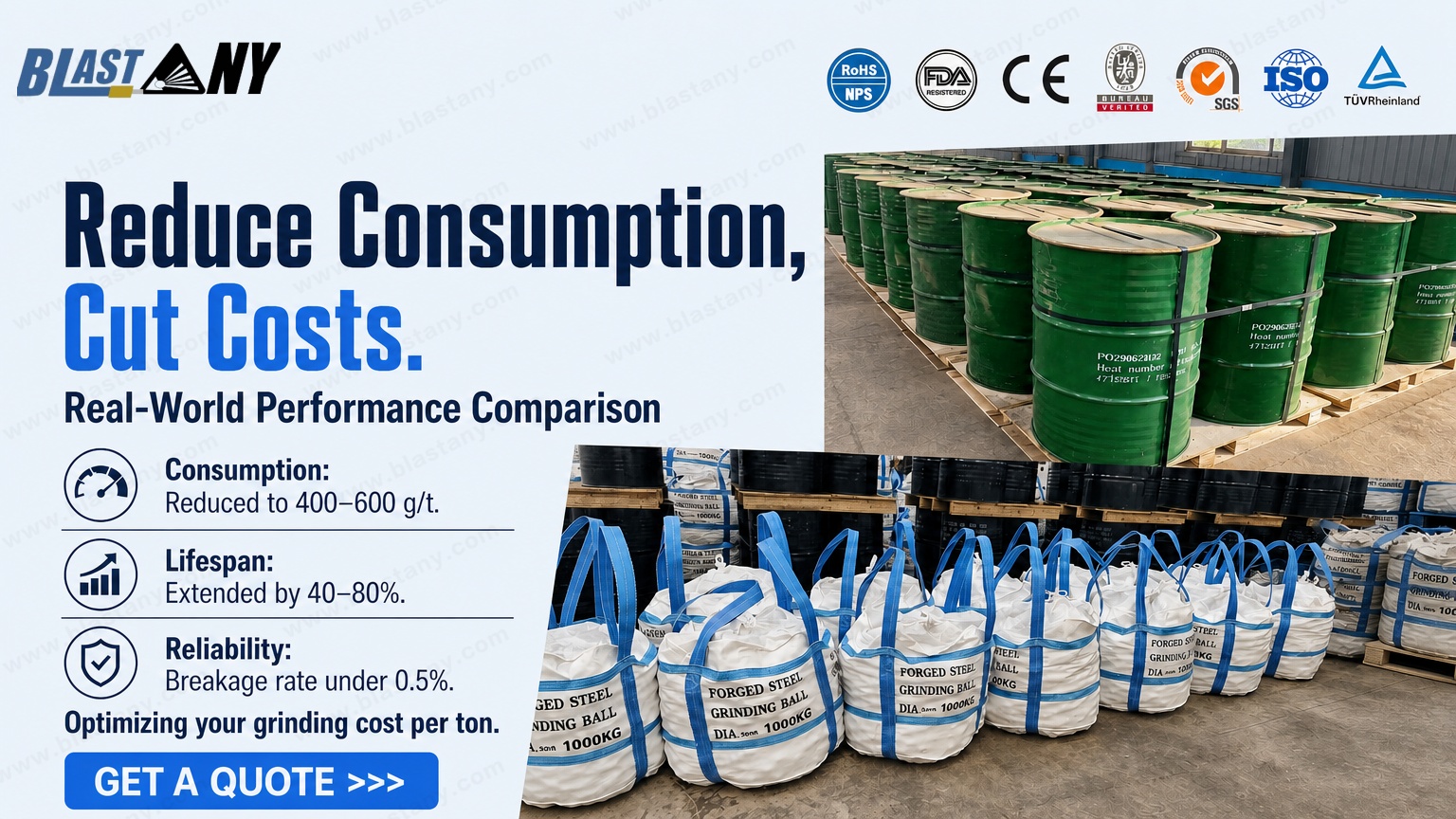
Consumption reduced from 800–1200 g/t to 400–600 g/t
Breakage rate reduced from 1–3% to ≤ 0.5%
Lifespan extended by 40–80%
Reducing ball consumption per ton directly cuts the grinding cost per ton of ore.
Conclusion
Steel ball wear is not an unavoidable loss — it is a variable controllable through materials science. Choose the right hardness, match it with toughness, apply the right process — wear slows down, and costs follow.
Post time: Sep-03-2026


