
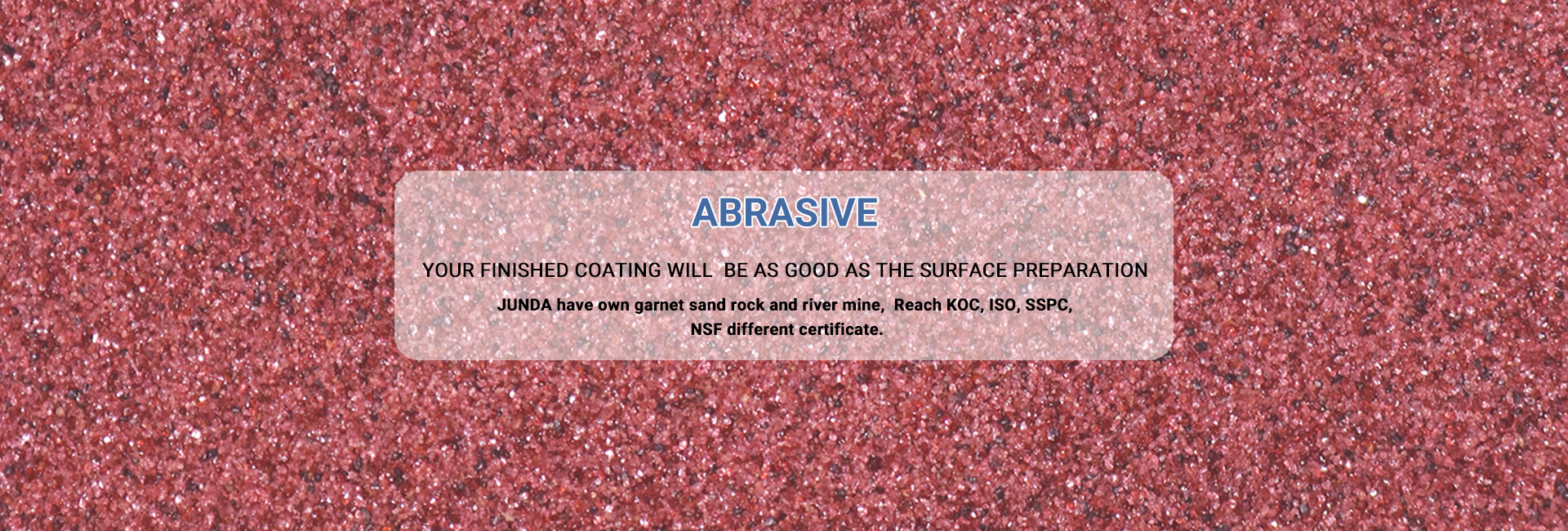
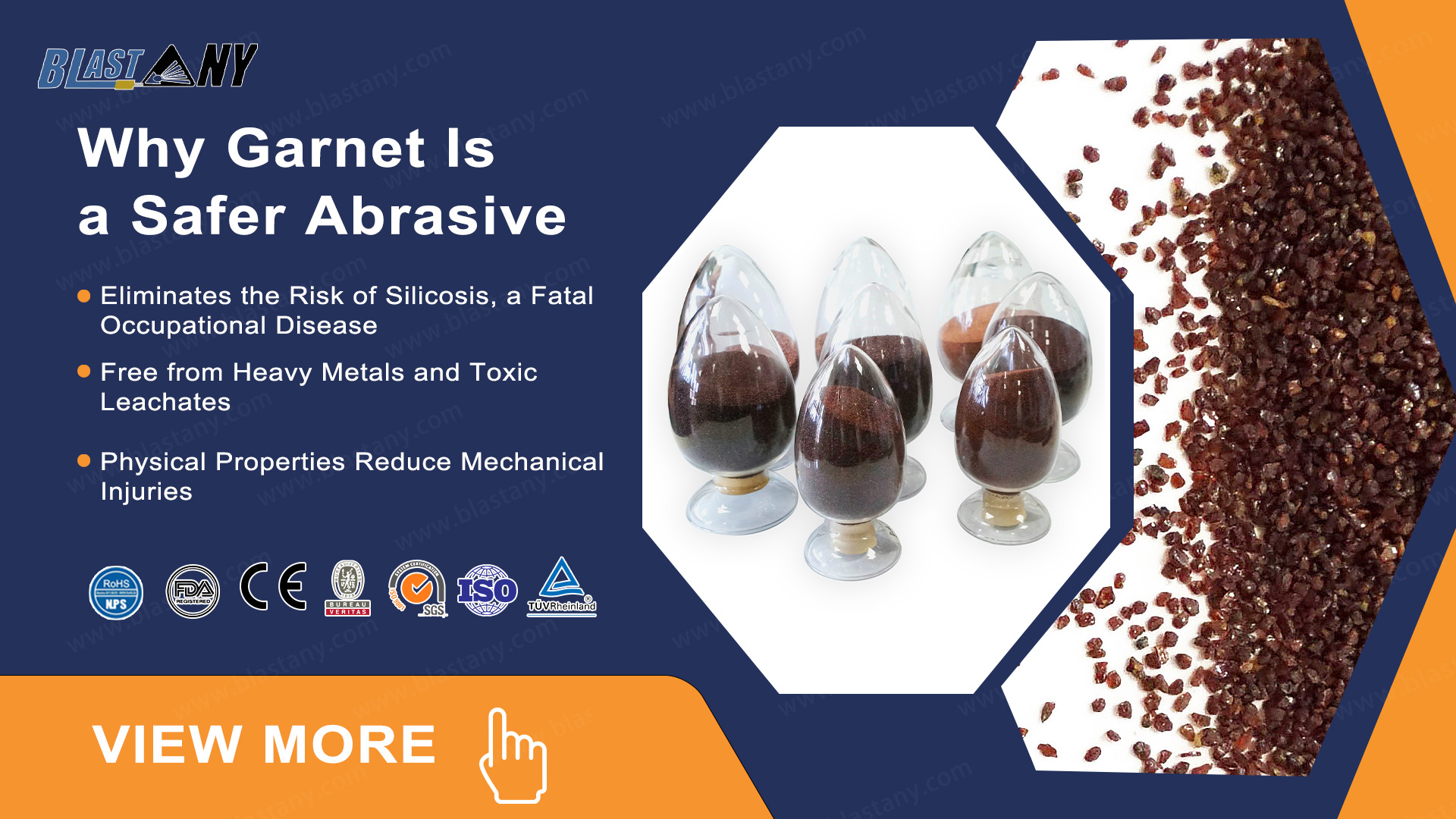
As a natural silicate mineral abrasive, garnet outperforms alternative abrasives in safety across four key categories: dust hazards, toxicology, mechanical injury risks and environmental compliance.
1. Eliminates the Risk of Silicosis, a Fatal Occupational Disease
Garnet crystallizes as iron-aluminum or calcium-aluminum silicate and contains virtually none free silica. Dust generated during blasting and grinding cannot accumulate silicon deposits in the human body, fundamentally eradicating silicosis hazards. This is the primary industrial driver for phasing out silica sand and adopting garnet as the preferred blasting abrasive.
2. Free from Heavy Metals and Toxic Leachates
Natural garnet consists primarily of iron, aluminum, silicon and calcium—common elements with low toxicity. It contains no heavy metals, arsenic, mercury or other highly toxic substances. Neither airborne dust nor flushing wastewater produced during dry or wet operations carries heavy metal contaminants, eliminating risks of chronic poisoning via skin contact or inhalation.
3. Physical Properties Reduce Mechanical Injuries
A.Moderate hardness (7–7.5 Mohs) and balanced toughness
B.Unlike corundum nd emery with extreme hardness that shatters into razor-sharp micro-fragments capable of piercing skin and lacerating respiratory linings;
C.Broken garnet particles develop blunted edges, drastically cutting the likelihood of lacerations and corneal abrasions from flying debris.
D.Balanced specific gravity minimizes rebound force At identical blasting pressures, garnet exhibits a narrower rebound splash radius, lowering impact injuries to operators’ eyes and facial areas.
E.Low static electricity buildup Compared to resin and plastic abrasives, garnet generates far less static charge, mitigating risks of dust ignition and dust explosions.
4. Less Hazardous Dust, Easier Dust Control
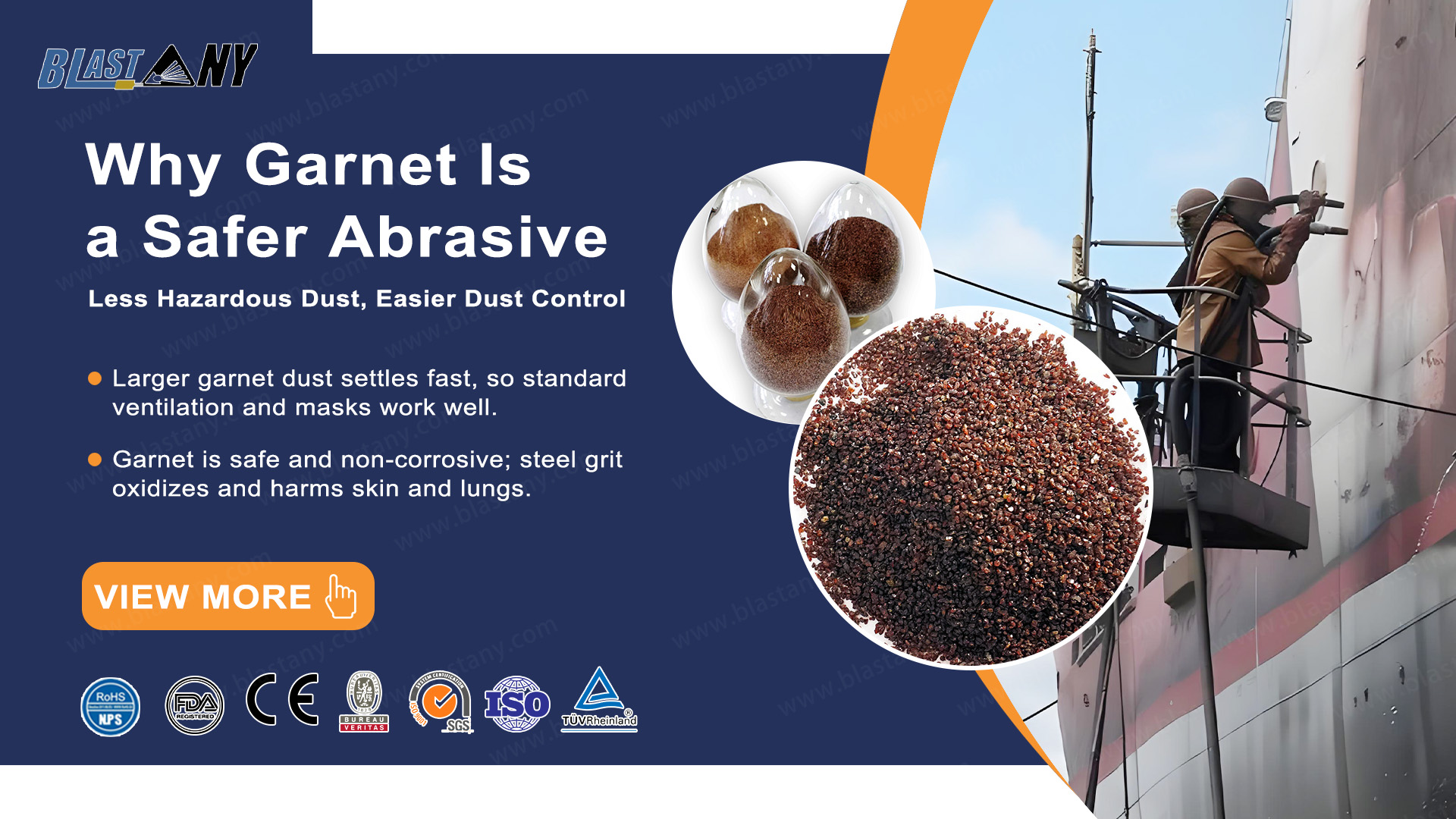
A.Coarser dust particles settle rapidly Fragmented garnet dust features larger particle sizes that do not remain suspended in air for extended periods. Workshop dust concentrations are simpler to regulate, allowing ventilation systems and dust respirators to deliver superior protective performance.
B.Chemically inert and non-corrosive Garnet is weakly neutral and does not irritate skin or erode respiratory mucous membranes. By contrast, steel grit readily oxidizes into corrosive iron oxide dust, which causes contact dermatitis and chronic respiratory inflammation with prolonged exposure.
5. Safe Disposal with No Secondary Hazards
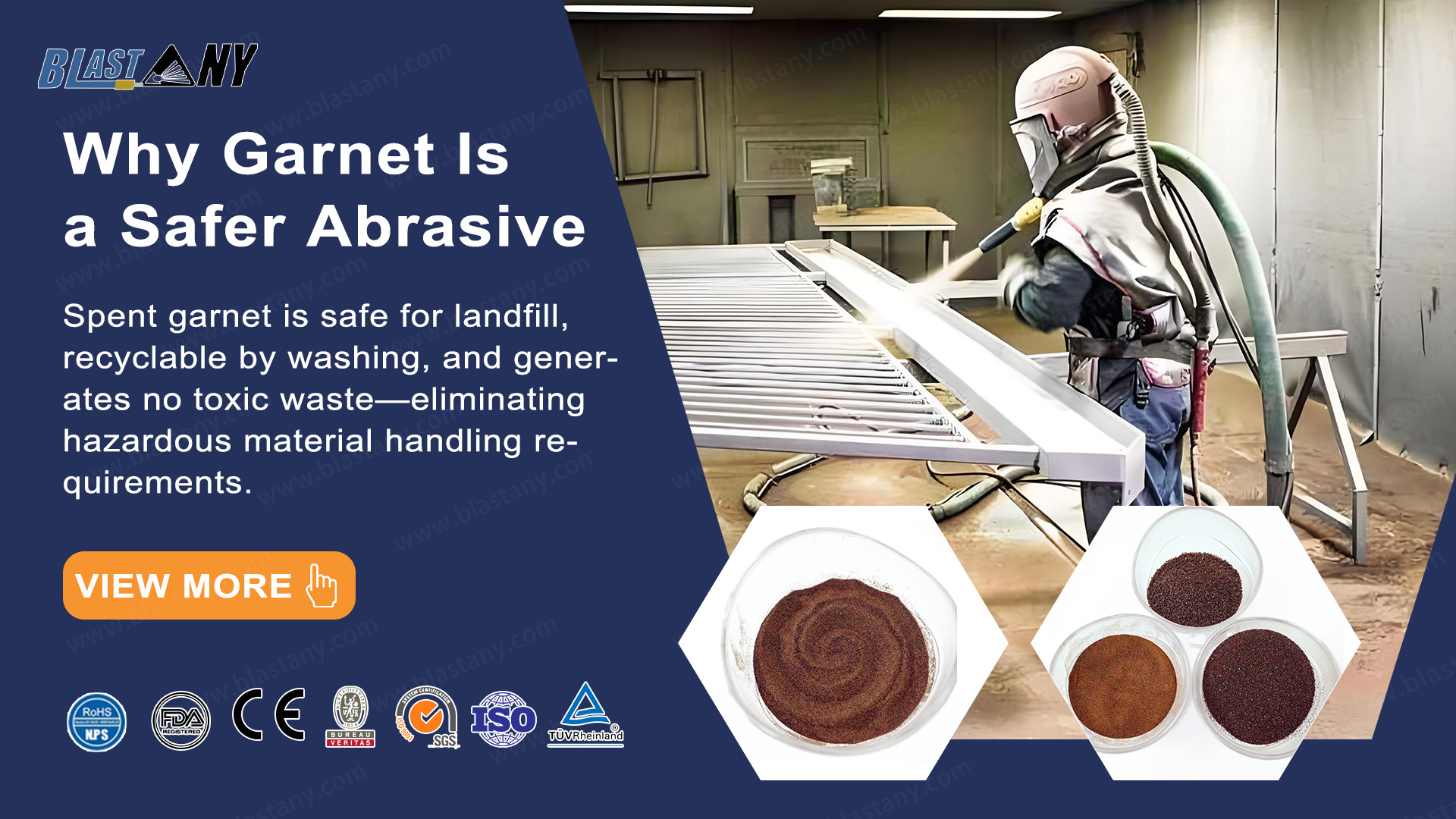
Spent garnet waste qualifies as ordinary mineral sediment, eligible for direct landfill disposal without hazardous waste handling permits. It supports recyclability via water washing: wet blasting generates negligible airborne dust, and wastewater meets discharge standards after basic sedimentation. No toxic waste liquids are produced, removing safety liabilities related to hazardous waste storage and transportation.
Summary
The core safety advantage of garnet abrasives is the complete elimination of silicosis induced by silica dust. Combined with non-toxic mineral composition, minimized mechanical injury risks and environmentally benign waste treatment, garnet serves as a compliant, low-risk eco-friendly abrasive widely used in blasting, waterjet cutting and stone polishing applications.
Post time: Jun-25-2026


